Where every successful investment begins
In my last Empire Brief, I shared the story behind the Empire Ecosystem and why each company came into existence. Looking back, none of them were part of some master plan. Each one was built because I kept seeing investors run into the same problems over and over again, and I wanted to solve them.
The interesting part is that, while every company serves a different purpose, they all have one thing in common: they only work if the very first decision is the right one, and that first decision is buying the right property.
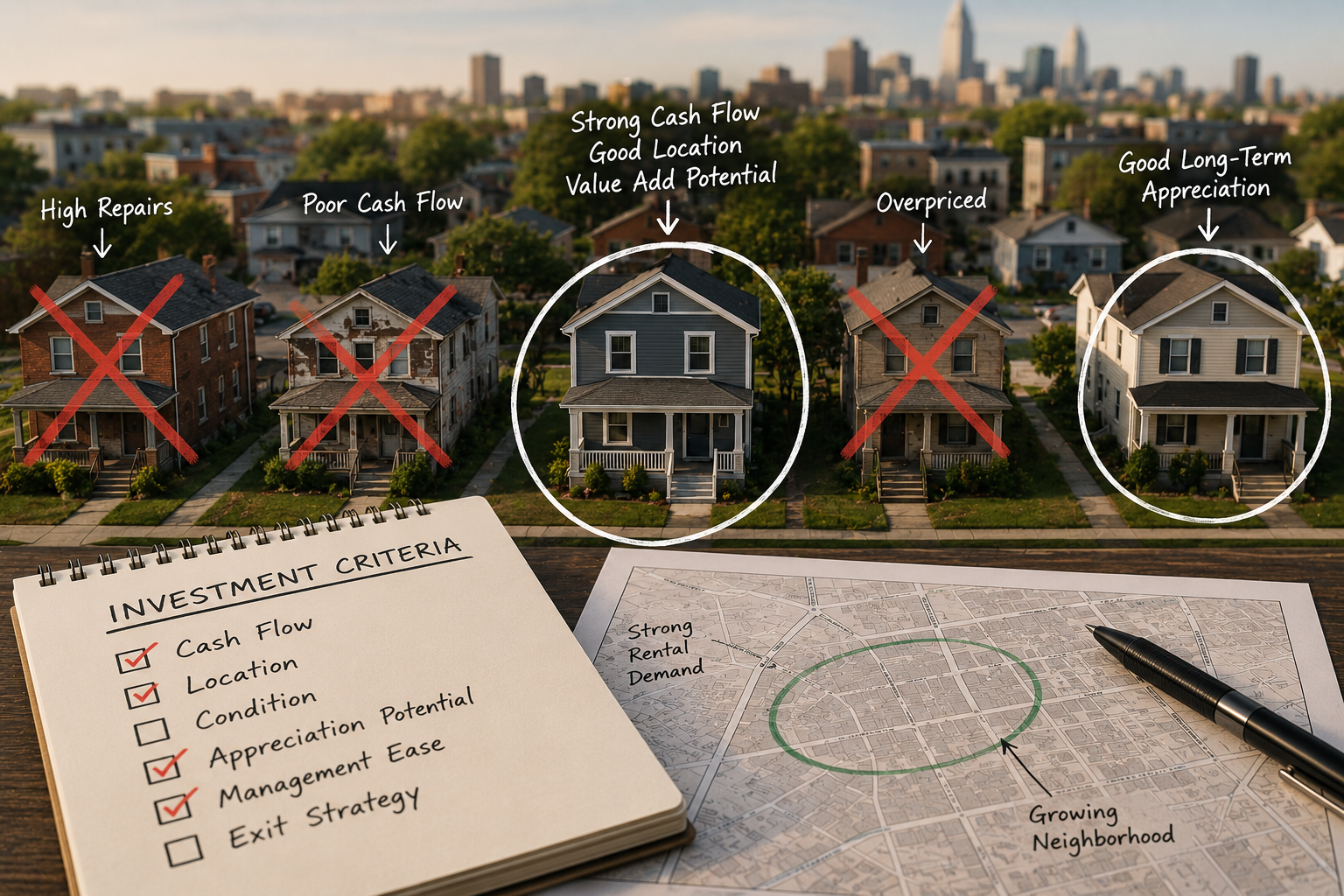
Now, before you think that's an obvious statement, let me explain what I mean. After more than fifteen years helping investors build portfolios, I've learned that buying the "right" property has very little to do with whether someone else thinks it's a good deal. In fact, one of the biggest lessons I've learned is that a property can absolutely be a good deal and still be the wrong investment.
The difference isn't the property. The difference is the investor.
Every investor is trying to accomplish something different
When an investor first sits down with me I don't want to spend too much time talking about available properties. I’d rather focus on them in that first conversation.
I want to understand where they are today, what they're trying to accomplish financially, and how they see real estate fitting into that picture. Some people are looking for additional monthly income. Others are focused on long-term appreciation. Some are trying to replace earned income before retirement, while others are simply looking to diversify their investment portfolio. Those goals lead to very different investment decisions.
That's why I don't believe there's a universal definition of a "good investment."
I've seen investors become disappointed with properties that were performing exactly as they were supposed to. The problem wasn't the building, the problem was that the investment never matched their expectations in the first place.
A good example is value-add real estate. These properties often require renovations, operational improvements, or repositioning before they reach their full potential. During that process, cash flow may be limited because the focus is on creating long-term value. For the right investor, that can be an outstanding strategy. For someone expecting immediate monthly income, it can feel like a frustrating experience.
Neither investor is wrong. They're simply trying to accomplish different things.
Looking beyond the listing
I've realized that I don't look at properties the way I did when I first got into real estate. When I walk through a building today, I'm certainly paying attention to its current condition, but I'm also thinking about everything that happens after the closing, such as:
Can the business plan realistically be executed?
What improvements will create value, and which ones are simply unnecessary expenses?
How difficult will the property be to manage?
What challenges are likely to surface over the next several years?
Most importantly, does this property actually help the investor achieve what they're trying to accomplish?
Those are the questions that matter to me because I've spent most of my career living through what happens after an acquisition. I've seen investors buy beautiful properties that never performed the way they expected. I've also seen investors buy buildings that most people overlooked and turn them into exceptional long-term investments. The difference was rarely the property itself. More often than not, it came down to having a clear plan, making disciplined decisions, and executing consistently over time.
That's one of the primary reasons I created Steel City Realty.
I never wanted to build a brokerage whose only purpose was helping people buy and sell real estate. I wanted to create a company that approached acquisitions from an investor's perspective instead of simply a transactional one. For me, buying the property has never been the finish line. It's the beginning of a much longer journey.
Thinking beyond the transaction
As a result of the Empire Ecosystem, we don't have the luxury of thinking only about the acquisition. The property we help someone purchase may eventually be managed by Empire Property Management. It may need renovations from Empire Property Construction. Every recommendation we make at the beginning eventually affects everything that follows.
That creates a different level of lifecycle accountability.
When we're evaluating a property, we're already thinking about how it will perform six months from now, three years from now, and sometimes even ten years from now. We're asking whether the business plan is realistic, whether the numbers support the strategy, and whether this investment truly aligns with the investor sitting across the table.
That also means there are times when we encourage people not to buy a property.
I have to laugh, because at first, that surprises some investors. But I've always believed that my responsibility is to help people make good investment decisions, not simply complete transactions. Walking away from the wrong property today is often far less expensive than trying to recover from the wrong investment tomorrow.
When I look back over the investors I've had the privilege of working with, many of them didn't build successful portfolios because they found one perfect deal. They built them because they made a series of thoughtful decisions that aligned with their goals, and each decision created the foundation for the next one.
That's why I believe every successful real estate investment begins long before the closing table. It begins with understanding what you're trying to build, and then finding the property that's capable of helping you get there.
In the next Empire Brief, I'll talk about what happens after you've made that decision, because buying the right property is only the first step. The business plan still has to be executed, and that's where property management has the opportunity to make or break an investment.